My dog was destroying furniture not because he was bad — but because he was bored. Two 20-minute walks weren’t cutting it for a high-energy breed that needed to think, not just move.
A puzzle toy changed everything. Mental fatigue is real for dogs, and a good puzzle drains energy faster than a long run. Within a week of daily puzzle sessions, the couch chewing stopped.
The Dog Puzzle Toy That Actually Challenges Your Dog
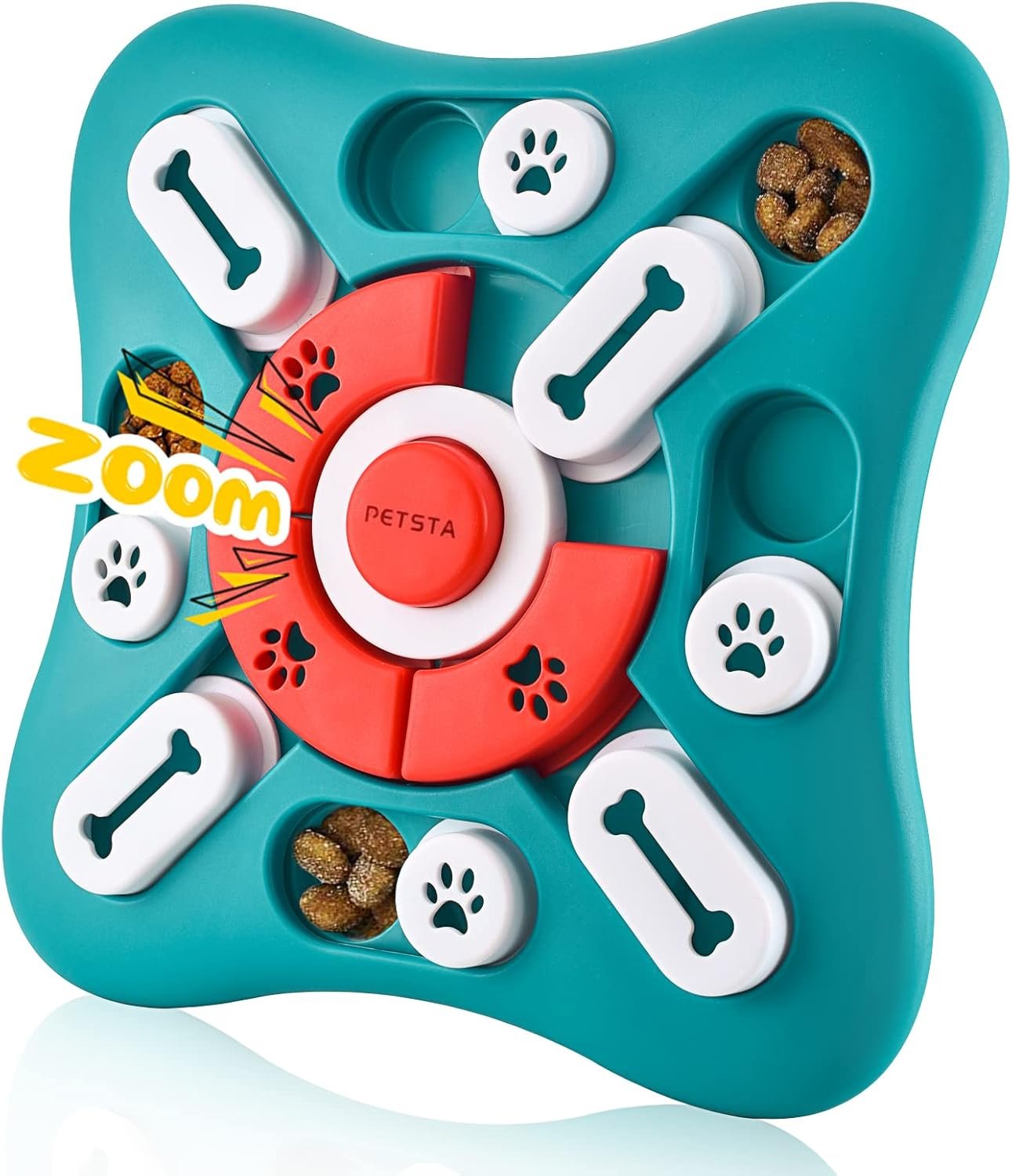
This is one of Amazon’s top-rated interactive dog puzzle toys in the $18–$40 range — designed to engage problem-solving instincts by hiding treats behind sliders, flippers, and compartments your dog has to figure out.
What sets a quality puzzle apart from a basic Kong:
- Multiple challenge mechanisms — sliders, rotating pieces, flip lids
- Difficulty levels from beginner to advanced
- Non-slip rubber base keeps the puzzle stable during use
- Dishwasher-safe materials for easy cleaning
- Sized appropriately for medium to large breeds
Why Mental Stimulation Is as Important as Physical Exercise
Dogs are problem-solving animals. In the wild, they’d spend hours foraging, tracking, and hunting. In a home environment, that cognitive drive has nowhere to go — until you give it a puzzle:
- 15 minutes of puzzle work equals roughly 30–45 minutes of physical exercise in terms of fatigue
- Mental stimulation reduces anxiety, destructive behavior, and excessive barking
- Slows eating for dogs that gulp food too fast
- Builds confidence in anxious or shy dogs as they successfully solve challenges
For dogs who need both mental and physical outlets, pairing a puzzle toy with a portable dog playpen for home creates a contained enrichment zone that gives you hands-free work time.
Before vs. After Daily Puzzle Sessions
Before:
- Chewing furniture legs and baseboards — clear boredom behavior
- Demanding constant attention during work-from-home hours
- Restless in the evenings even after walks
- Destructive behavior escalating with age
After:
- 20 minutes with the puzzle = calm, settled dog for 2+ hours
- No furniture damage since week one
- More independent — able to entertain himself
- Visibly more confident and less anxious overall
How to Progress Your Dog Through Puzzle Difficulty
- Start on the easiest setting with highly motivating treats — let them succeed immediately to build drive.
- Once they’re solving the level 1 in under 2 minutes, move to level 2.
- Introduce more complex boards gradually — jumping levels too fast causes frustration, not engagement.
- Rotate between 2–3 different puzzles weekly — novelty keeps interest high.
- Use meal kibble instead of treats once they’re engaged — reduces calorie intake while maximizing use.
For dogs who get anxious when left alone, the $45 pet camera with 2-way audio lets you watch them work the puzzle remotely and toss treats as a reward.
Q&A: Dog Puzzle Toy Questions People Ask
Q: Can my dog break or ingest the pieces?
Always supervise with puzzle toys, especially the first few sessions. Quality toys use durable ABS plastic — replace any cracked or chewed pieces immediately.
Q: What treats work best?
Small, smelly, high-value treats get dogs most engaged. Once they understand the game, regular kibble works well.
Q: My dog gave up after 2 minutes — is the puzzle too hard?
Probably, yes. Start at the easiest setting and back-load with visible, accessible treats to rebuild confidence and interest.
Q: How often should I use it?
Daily use is fine. Most dogs stay engaged with 15–30 minutes per session.
Final Take
A dog puzzle toy is one of the most effective and affordable behavioral tools you can add to your routine. It addresses the root cause of most bad dog behavior — boredom — rather than just treating symptoms.
A tired brain is a good dog.
Think. Solve. Rest. Repeat.