My first aquarium filter was the hang-on-back unit that came with the tank starter kit. It kept the water technically clear, ran at one speed, and needed weekly cleaning or the flow dropped to a trickle. My fish survived. The tank never looked great.
Upgrading to a canister filter transformed the tank. Water clarity went from acceptable to genuinely crystal-clear. I clean the filter every 6–8 weeks instead of weekly. Fish are noticeably more active, and my planted tank started actually growing plants instead of just keeping them alive.
The Canister Filter That Maintains Crystal-Clear Aquarium Water
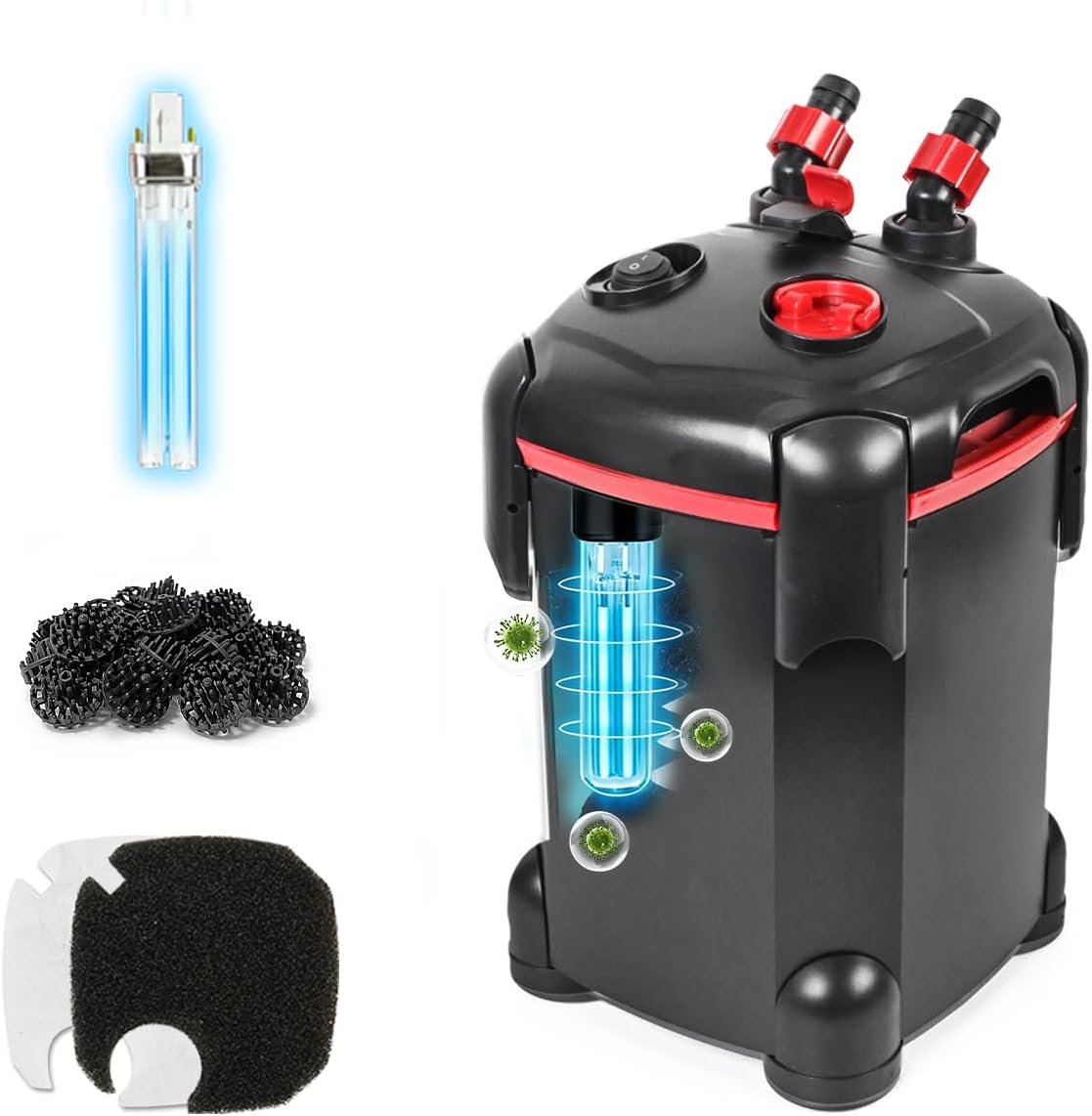
This is one of Amazon’s top-rated aquarium canister filters in the $60–$150 range — featuring multi-stage filtration (mechanical, biological, and chemical media), adjustable flow rate, self-priming pump, and silent operation suitable for living room placement.
What separates a canister filter from basic hang-on-back models:
- Multi-stage media chambers: separate compartments for mechanical (sponge), biological (ceramic rings), and chemical (activated carbon) filtration — each stage handles different water quality issues
- Higher water volume turnover: processes 5–10x the tank volume per hour — essential for heavily stocked or planted tanks
- External placement: sits inside the cabinet below the tank, not hanging on the rim — invisible and quieter
- Longer maintenance intervals: large media volume means cleaning every 6–8 weeks vs. weekly for HOB filters
- Adjustable flow direction: spray bar or nozzle distributes return flow evenly without disturbing substrate
Understanding Aquarium Filtration: The Three Stages
Effective aquarium filtration requires all three stages working together:
- Mechanical filtration: physical sponge or floss captures particles, debris, and uneaten food before they decompose
- Biological filtration: ceramic rings, bio-balls, or matrix media provide surface area for beneficial bacteria that convert toxic ammonia and nitrite to less-harmful nitrate
- Chemical filtration: activated carbon removes dissolved organic compounds, medications, tannins, and odors that biological filtration cannot address
A quality filter is foundational to fish health. For tropical fish setups where temperature stability is equally important, the best aquarium heater for tropical fish guide covers how consistent temperature and clean water work together for optimal fish health.
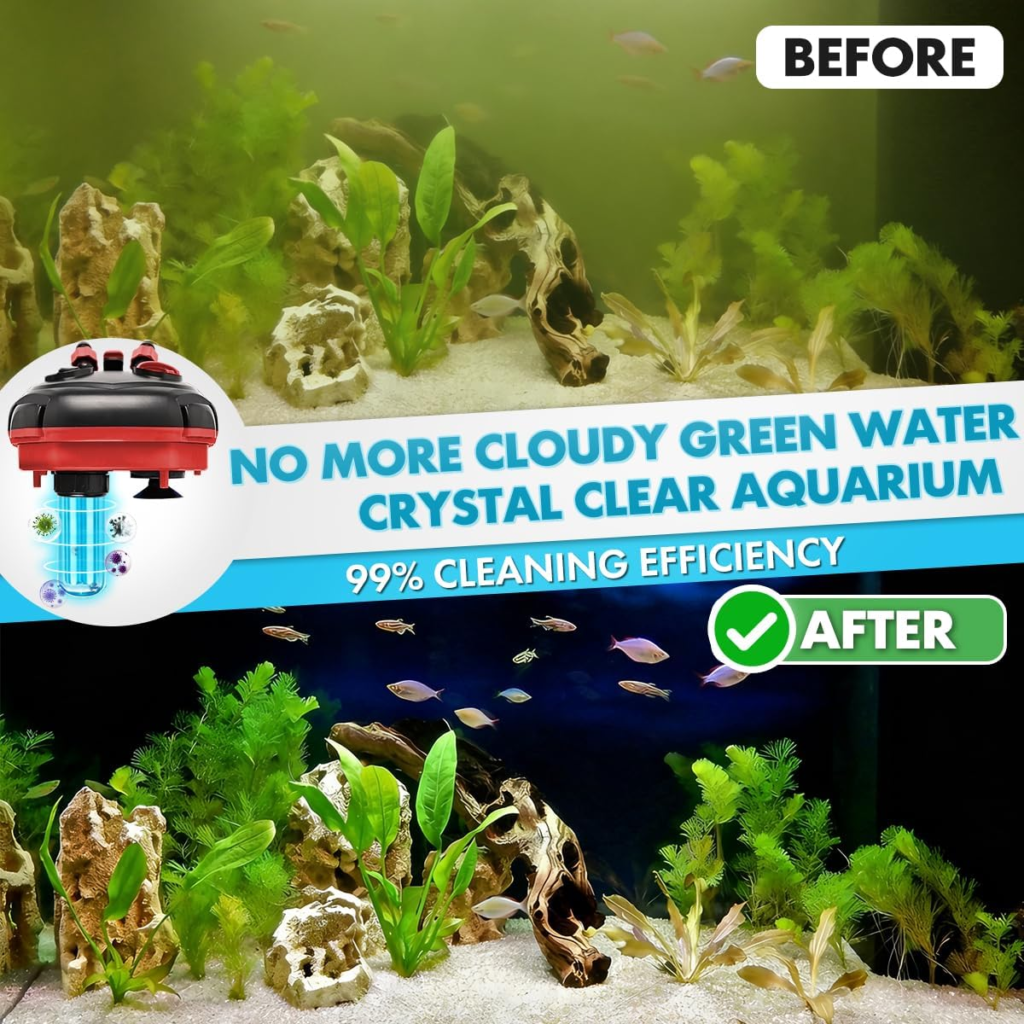
Before vs. After Upgrading to a Canister Filter
Before (hang-on-back filter):
- Water acceptable but slightly hazy, especially after feeding
- Weekly filter cleaning required to maintain adequate flow
- Noise from HOB motor audible in quiet room
- Plants growing slowly due to insufficient water circulation delivering CO2 and nutrients to leaves
After (canister filter):
- Water visibly clearer within 48 hours of installation — glass panels look clean even without wiping
- Cleaning interval extended to 6–8 weeks with no flow reduction
- Filter completely silent — inaudible from sitting position in the same room
- Plant growth noticeably improved from better water circulation and nutrient distribution
Sizing a Canister Filter for Your Tank
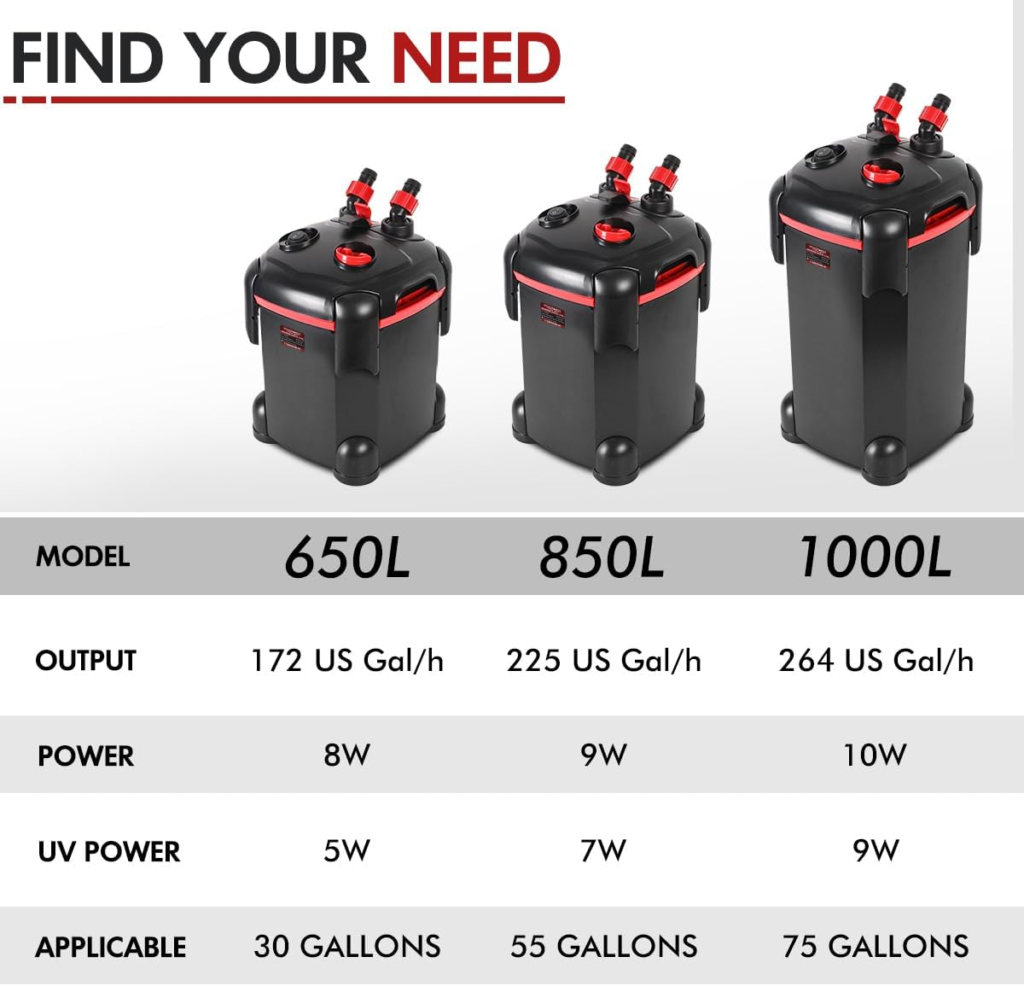
- Calculate your tank volume in gallons. A 50-gallon tank needs a filter rated for 50+ gallons.
- Target flow rate of 5–10x tank volume per hour. A 50-gallon tank needs 250–500 GPH minimum.
- For planted or heavily stocked tanks, go to the upper end of the range or size up one model.
- For discus, goldfish, or other high-waste species, double the standard recommendation. These fish produce significantly more waste than typical community fish.
- Check inlet/outlet tubing diameter matches your existing setup or buy the appropriate adapters. Most canister filters include multiple fitting sizes.
For complete aquarium setup guidance beyond filtration, the automatic pet feeder guide for scheduled feeding covers how scheduled automatic feeding reduces the waste and ammonia spikes that cause filtration problems in the first place.
Q&A: Canister Filter Questions Aquarium Keepers Ask
Q: Can I use a canister filter on a small tank under 20 gallons?
Yes, but size down appropriately. Many manufacturers offer canister filters for 10–30 gallon tanks. The main benefit at small sizes is still multi-stage filtration and quieter operation — though for tanks under 20 gallons, a quality HOB filter can be adequate if budget is a concern.
Q: How do I prime a canister filter on first start?
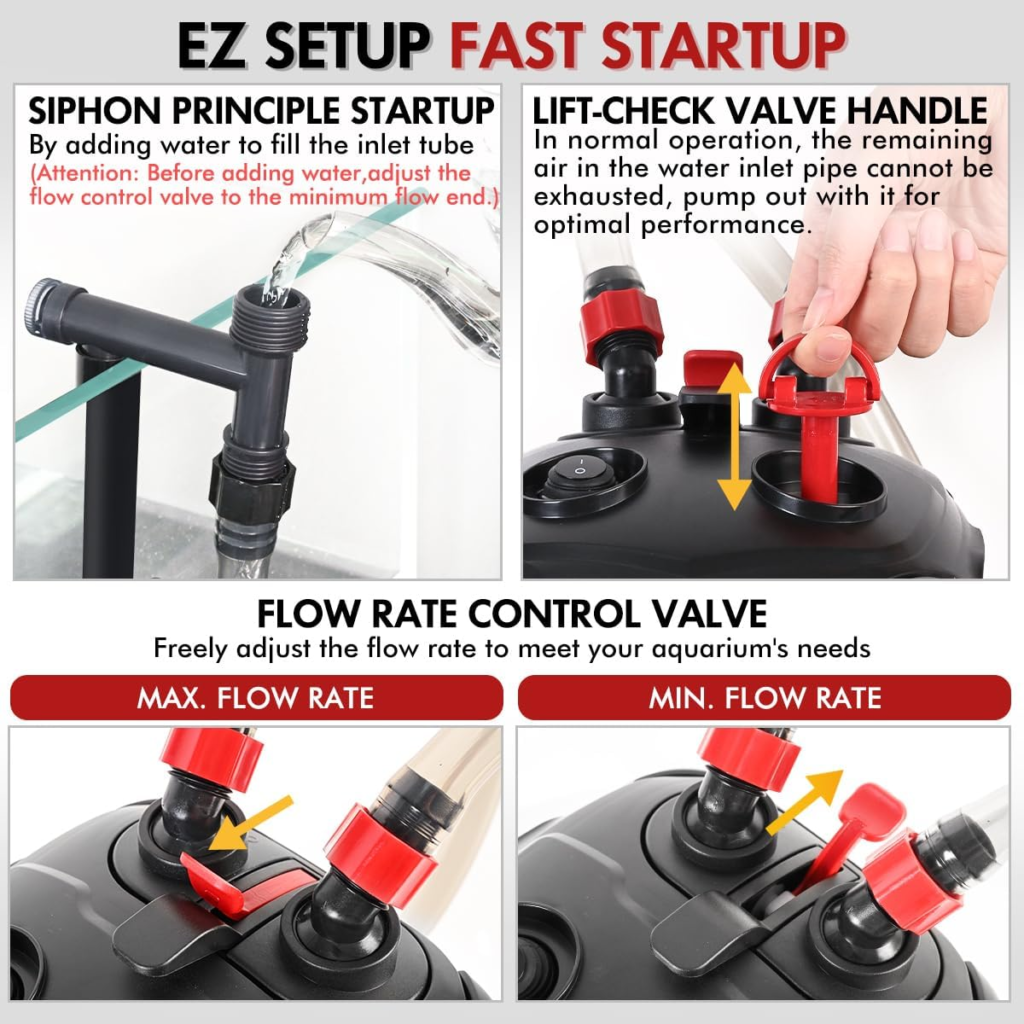
Most modern canister filters are self-priming: fill the canister with water, close the lid, connect tubing, and press the prime button or lever. Water siphons from the tank to fill the filter body. Read your model’s specific instructions — improper priming is the most common first-use issue.
Q: Will a canister filter disturb my betta or slow-water fish?
Flow rate is adjustable on quality canister filters. For bettas or other low-flow species, use the spray bar return attachment and reduce flow to the minimum setting. Distribute the return flow along the surface rather than pointing it down into the tank.
Q: How often should I replace filter media?
Mechanical media (sponge): rinse in tank water during every cleaning, replace when permanently discolored. Biological media: never replace entirely — it carries beneficial bacteria. Chemical media (carbon): replace every 4–6 weeks as it becomes saturated.
Final Take
A canister filter is the single most impactful equipment upgrade for any serious aquarium keeper. Better clarity, longer maintenance intervals, quieter operation, and multi-stage filtration that genuinely supports fish health — it outperforms basic hang-on-back filters in every meaningful metric.
Crystal water. Quiet operation. Fish that thrive.
Filter right. Clean less. Tank always clear.
Affiliate disclosure: This article may contain affiliate links. If you purchase through them, PetGuideClub.com may earn a small commission at no additional cost to you.