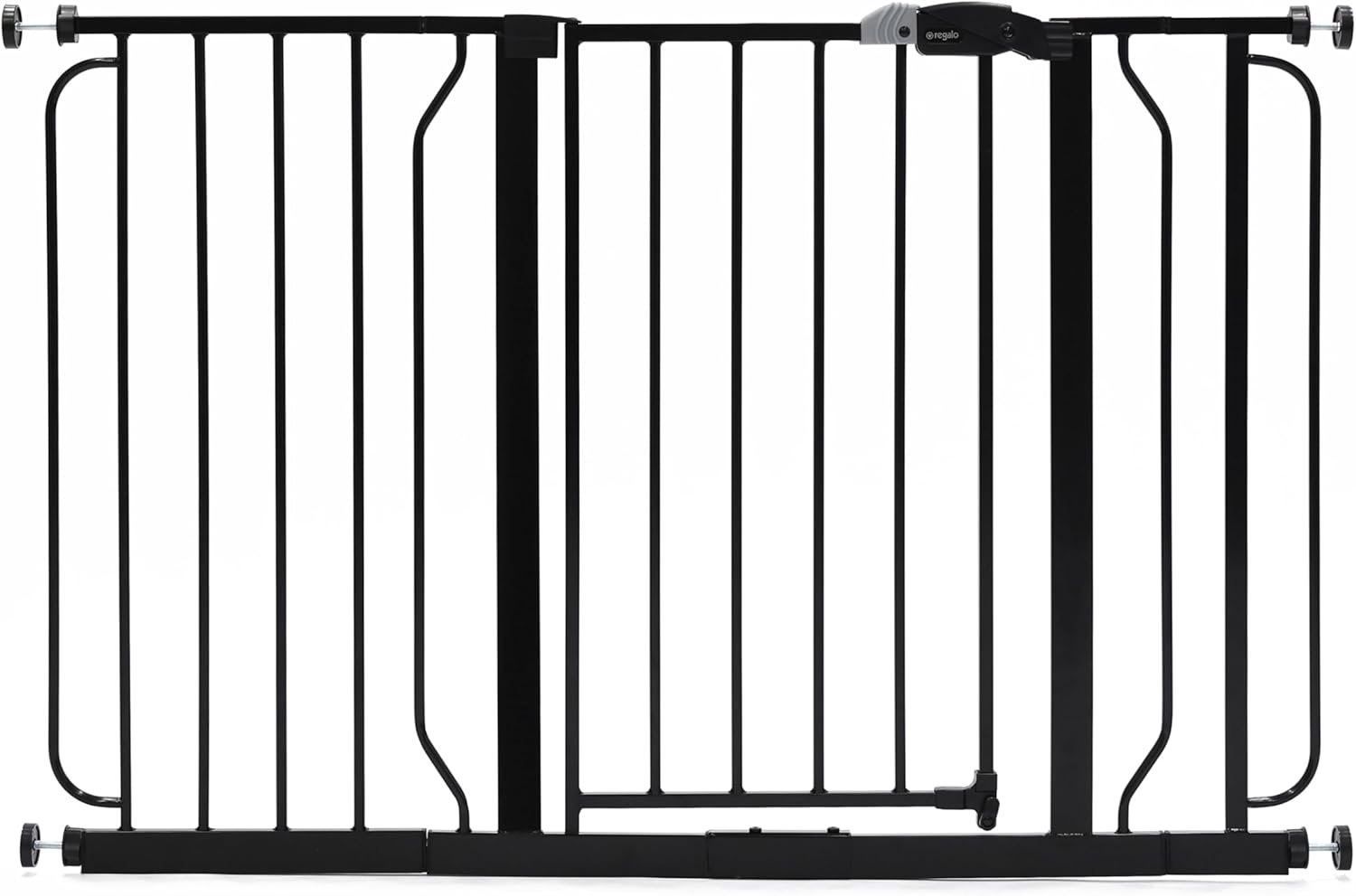
My 70-pound golden retriever treated every gate I bought as a suggestion. Cheap pressure gates wobbled, cheap freestanding panels got pushed over, and baby gates designed for toddlers lasted about one enthusiastic nudge from a determined dog.
The expandable pet gate that actually worked had three things the others lacked: genuine width adjustability, solid pressure-mount hardware, and a walk-through door I’d actually use instead of stepping over. Once I stopped stepping over it, the gate got closed every time.
The Expandable Pet Gate That Adapts to Any Doorway or Hallway
This is one of Amazon’s top-rated expandable pet gates in the $45–$90 range — featuring telescoping panels that fit openings from 29 to 50+ inches, a built-in walk-through door with one-hand operation, and pressure mounting that requires no tools or wall damage.
What separates a quality expandable gate from a cheap one:
- Steel or reinforced aluminum frame — dogs can’t flex it to create gaps
- Secure pressure mount with 4+ contact points — won’t tilt or bow under pressure
- Walk-through door with auto-close mechanism — stays shut when you forget
- Width extension panels included — covers openings other gates can’t reach
- Height of 30–36 inches — stops most dogs from jumping over
Pressure Mount vs. Hardware Mount: Which Is Right for You?
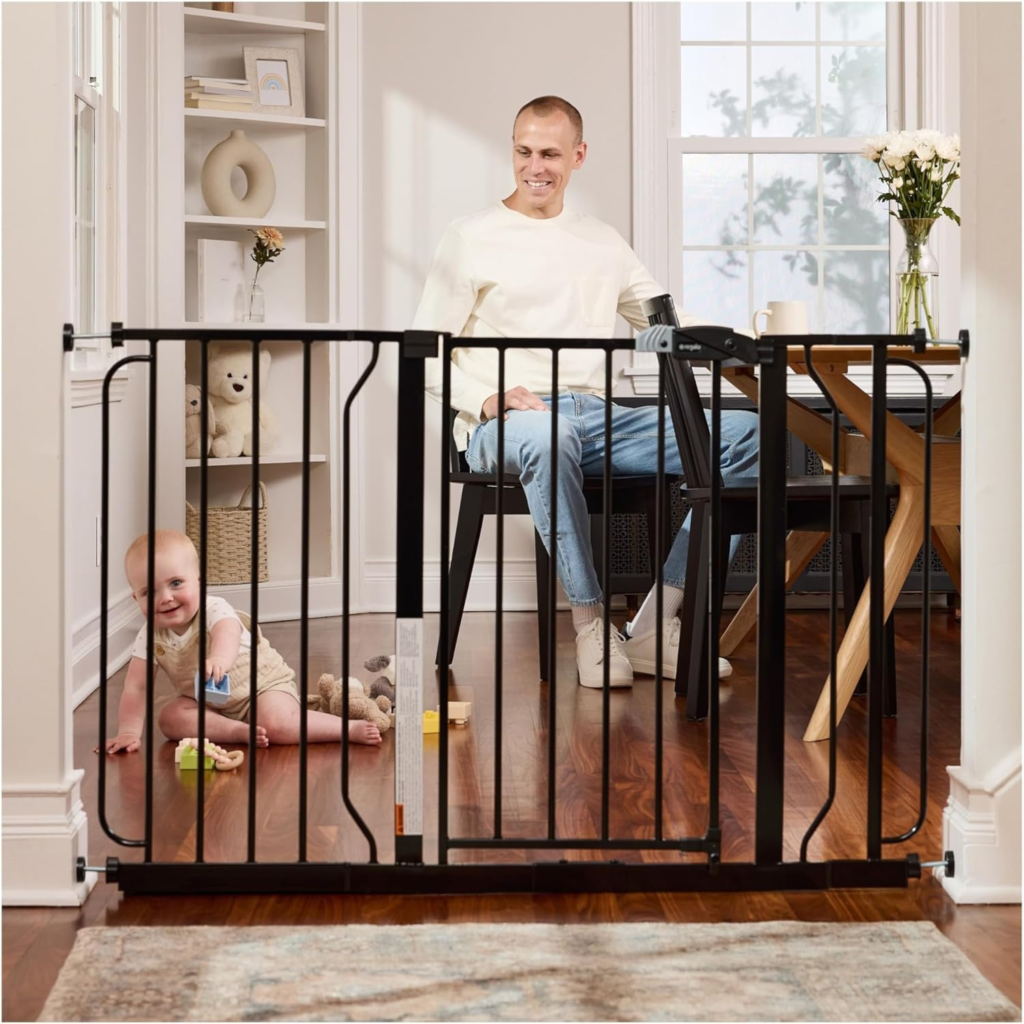
Most renters and people who want flexibility choose pressure-mount gates — no drilling required, no holes in walls or door frames:
- Pressure mount: installs in minutes, leaves no damage, can move room to room
- Hardware mount: permanent installation, better for top of stairs where security is critical
- For bottom of stairs, hallways, and room doorways — pressure mount is sufficient for most dogs
- For top of stairs or extra-determined large breeds — hardware mount provides peace of mind
If you’re setting up a safe zone for a new puppy that involves both containment and rest areas, the best orthopedic dog bed for large breeds pairs well with a gated room setup to give dogs a comfortable, contained space of their own.
Before vs. After the Quality Expandable Gate
Before:
- Dog in the kitchen constantly — underfoot while cooking, counter-surfing when unattended
- Cheap gates getting pushed over or squeezed past within days
- Stepping over barriers instead of opening them — gates left down half the time
- Rooms off-limits were only off-limits until you turned your back
After:
- Kitchen genuinely dog-free during meal prep — safety improved for dog and cook
- Walk-through door means the gate stays closed because using it is effortless
- Dog accepts the gate as a boundary — stopped testing it after the first week
- Visiting toddlers also contained — works as a baby gate too
5 Tips for Getting the Most From Your Pet Gate
- Measure your opening at its widest point — an inch of extra width means unstable pressure mounting.
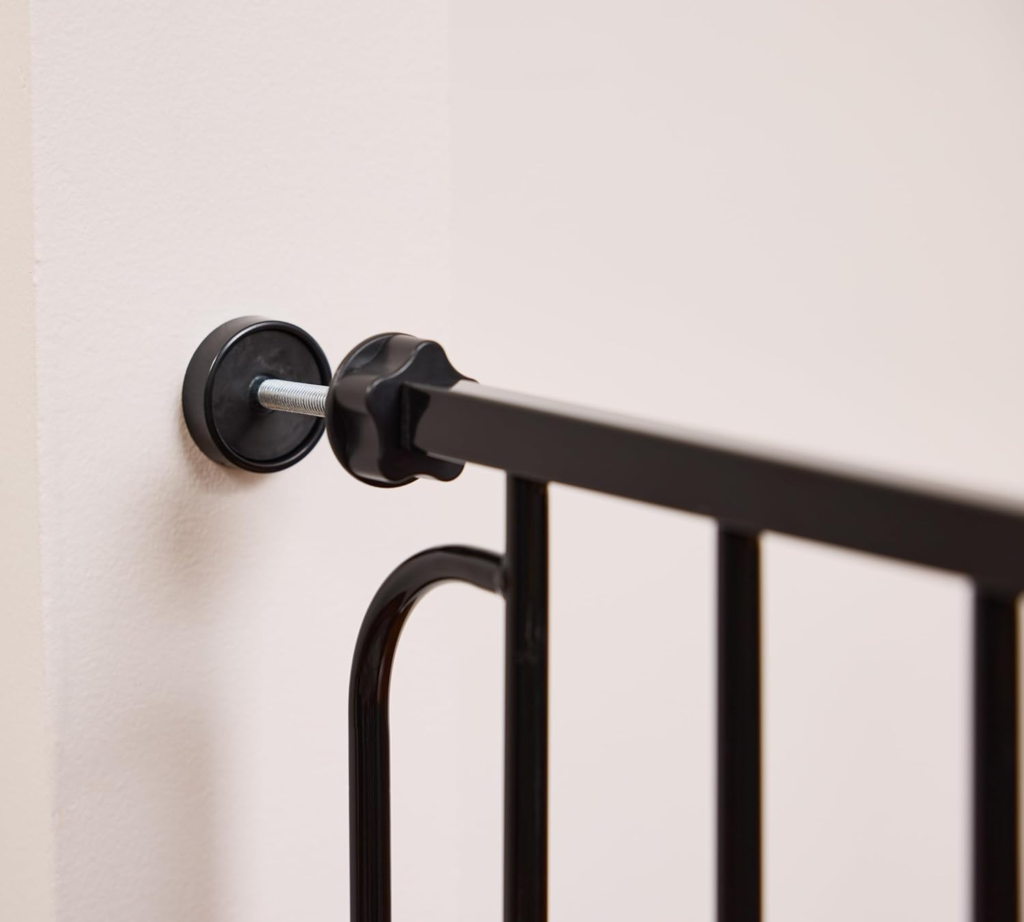
- Position the pressure pads at frame height, not drywall — you’ll get a more secure mount without wall damage.
- Teach your dog the gate is closed by returning them gently the first few times they test it — consistency sets the expectation.
- Use the walk-through door every single time instead of stepping over — once you step over, you’ll always step over.
- If the gate wobbles slightly after weeks of use, re-tighten the pressure knobs — temperature changes can loosen the fit.
For households with multiple pets where the gate is one part of a larger management strategy, the guide to introducing a new dog to your home covers how physical boundaries support successful multi-pet introductions.
Q&A: Pet Gate Questions People Actually Ask
Q: Will a pressure gate work for a large dog like a German shepherd or lab?
Yes, if the gate is steel or heavy-gauge aluminum and has secure 4-point pressure mounting. Lightweight plastic gates aren’t suitable for large, strong dogs regardless of pressure mount quality.
Q: How wide can an expandable gate go?
Most expandable gates cover 29–52 inches. Some include additional extension panels that push coverage to 60+ inches for wide openings. Always confirm the max width before purchasing.
Q: Can I use it at the top of stairs?
Pressure-mount gates are not recommended for tops of stairs due to the safety risk if a dog knocks them down. Use hardware-mount gates for stair tops where a fall is possible.
Q: Will it work for cats too?
Most cats can jump over a 30-inch gate. Gates designed to contain cats need to be 36+ inches or include a solid (non-barred) design that prevents climbing. Check the product height and bar spacing for small animals.
Final Take
The right expandable pet gate is the one you’ll actually use — and you’ll use it consistently only if the walk-through door requires zero effort. A gate you step over is a gate that stays down.
Right width. Right height. Actually stays shut.
Measure once. Mount securely. Dog-free kitchen achieved.
Affiliate disclosure: This article may contain affiliate links. If you purchase through them, PetGuideClub.com may earn a small commission at no additional cost to you.