I refilled a standard bird feeder twice a week for a month before I realized squirrels were emptying it in a single morning.
A squirrel-proof feeder changed everything. The birds discovered it within 24 hours. The squirrels gave up trying within a week. My yard has been genuinely transformed — finches, chickadees, and cardinals visiting daily without losing half the seed to wildlife.
The Squirrel-Proof Bird Feeder That Actually Works
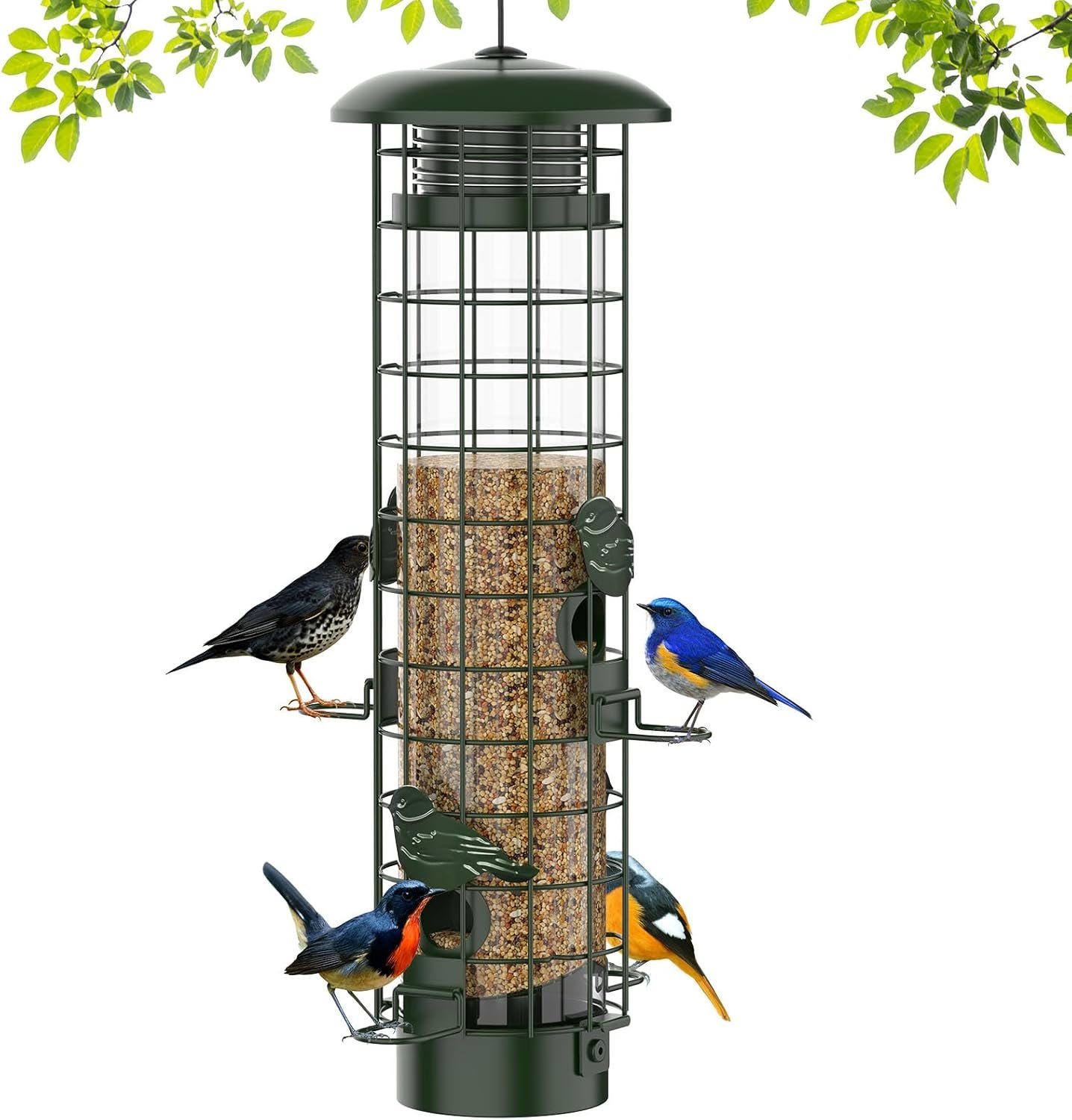
This is one of Amazon’s top-rated weight-activated squirrel-proof feeders in the $30–$65 range — designed to close seed ports automatically when a squirrel’s weight triggers the mechanism.
How it works:
- Spring-loaded perch ring closes seed access when heavy animals land
- Birds (typically under 2 oz) access seed freely — squirrels (1–1.5 lbs) trigger the shutoff
- Weight threshold is adjustable on premium models
- Durable metal or UV-resistant plastic construction
- Easy-open top for refilling without tools
Why Bird Feeding Is Worth Doing Properly
Backyard bird feeding is more than aesthetically pleasant — it’s genuinely beneficial for local bird populations, especially during winter and early spring when natural food sources are limited:
- Supplemental feeding supports birds through cold snaps and late freezes
- Consistent food sources attract breeding pairs that stay in the area
- Insect-eating birds provide natural pest control in gardens and yards
- Bird watching is a low-cost, high-engagement hobby with documented mental health benefits
For households with both birds and pets, the beginner pet care checklist at PetGuideClub covers cohabitation tips for multi-species households.
Which Birds Will You Attract?
Seed type determines your visitors as much as feeder design:
- Black oil sunflower seeds: cardinals, chickadees, nuthatches, titmice — the widest appeal
- Nyjer (thistle) seed: finches exclusively — goldfinches are spectacular in spring
- Safflower seed: cardinals prefer it; squirrels dislike it — a natural deterrent
- Suet cakes: woodpeckers, nuthatches, and brown creepers in winter
Before vs. After Using a Squirrel-Proof Feeder
Before:
- Refilling the feeder 2–3 times per week
- Squirrels monopolizing the feeder from dawn to mid-morning
- Few birds visiting because the feeder was always being raided
- Seed scattered everywhere below the feeder — attracting mice
After:
- Refilling once a week — birds are much lighter consumers
- Daily finch, chickadee, and cardinal visits
- Squirrels visible but unable to access the feeder — they moved on
- Far less scattered seed = far less ground rodent activity
Placement and Maintenance Tips
- Hang the feeder 5–6 feet from the ground and at least 10 feet from trees or structures squirrels can jump from.
- Position it near a shrub or bush — birds like a nearby escape route.
- Clean the feeder monthly with a 10% bleach solution to prevent mold and disease.
- Empty and dry before refilling — wet seed clumps and spoils quickly.
- In winter, brush snow away from ports after heavy storms to keep access open for birds.
For dog owners who also feed birds, the $55 smart pet feeder review shows how to keep your dog’s feeding schedule equally reliable while managing the yard.
Q&A: Squirrel-Proof Bird Feeder Questions People Ask
Q: Do squirrel-proof feeders actually work?
Weight-activated models are genuinely effective — not 100% under all circumstances, but far better than standard feeders. Most squirrels give up after repeated failed attempts.
Q: What if large birds trigger the mechanism?
Adjustable weight threshold models let you fine-tune sensitivity. Set it above the weight of your heaviest desired visitors.
Q: How long before birds find the feeder?
Usually 2–7 days. Place it near existing perches or trees and birds will discover it quickly.
Q: Can I use any seed mix in it?
Yes, though thinner tube feeders work best with smaller seeds. Avoid seed mixes with fillers like milo — birds discard them and they attract ground pests.
Final Take
A squirrel-proof bird feeder isn’t an optional upgrade — it’s the only type worth buying if you want to actually feed birds rather than squirrels.
The birds notice the difference within days. Your patience and seed budget will thank you within weeks.
Real birds. Real seeds. Zero squirrels.