I tried brushing my cat’s teeth exactly once. She bit the toothbrush in half, scratched my forearm, and hid under the bed for three hours. The vet said dental care was important. My cat said absolutely not.
Cat dental treats bridged that gap. They’re crunchy enough to scrape plaque during chewing, flavored enough that my cat actually wants them, and the whole process takes about 10 seconds instead of a wrestling match. Her breath improved within a week, and the vet noticed less tartar buildup at her next cleaning.
The Tartar-Control Cat Treat Built for Daily Dental Maintenance
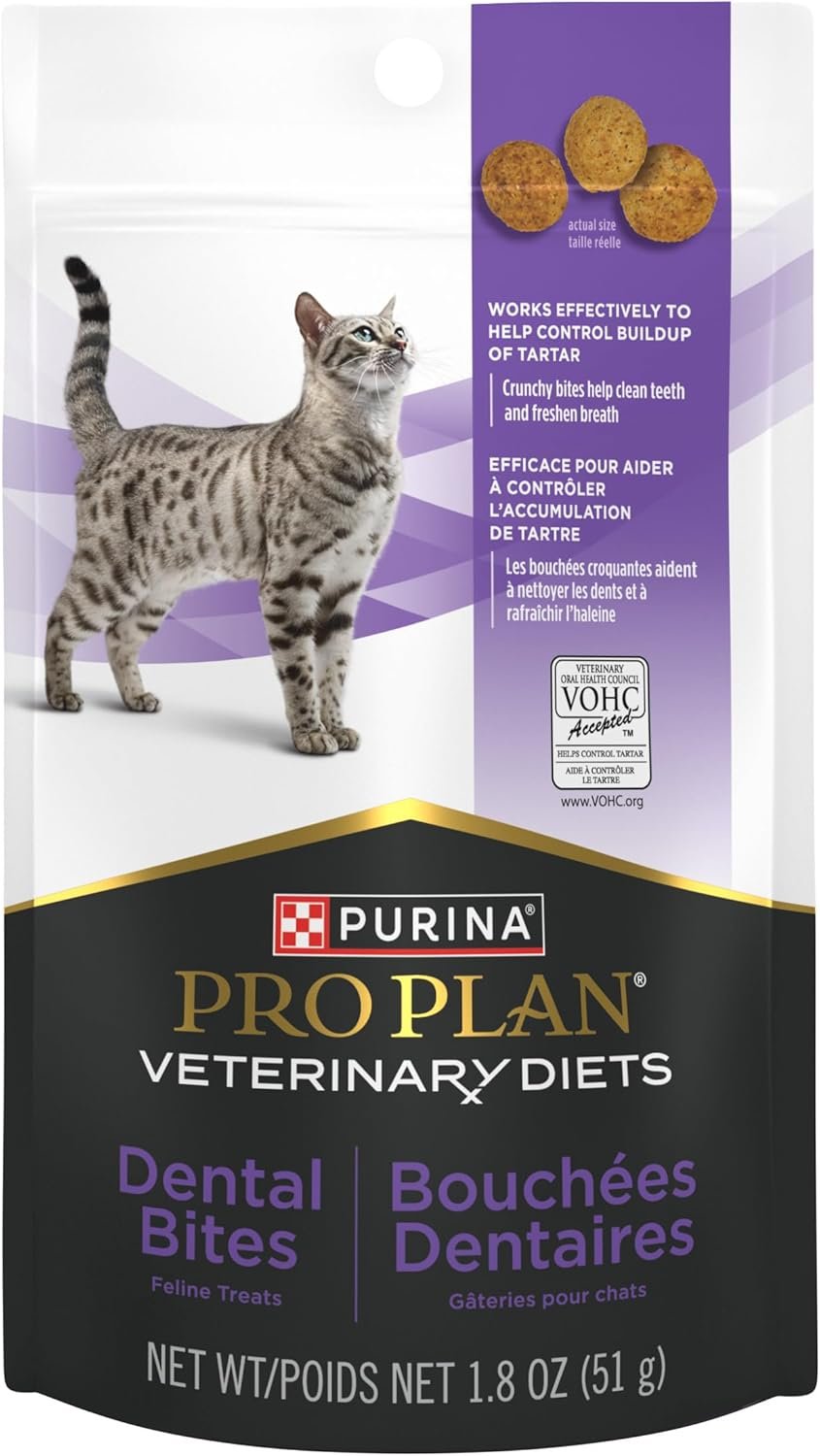
This is one of Amazon’s top-rated cat dental treats in the $5–$15 range — featuring a crunchy texture designed to reduce plaque and tartar, added breath-freshening agents, and VOHC (Veterinary Oral Health Council) accepted formulation.
What makes a dental treat actually effective:
– VOHC acceptance seal — independently verified to reduce plaque or tartar, not just a marketing claim
– Crunchy, abrasive texture — soft treats don’t mechanically clean teeth during chewing
– Appropriate size for cats — treats sized for dogs are either too large to chew properly or swallowed whole
– Sodium tripolyphosphate or similar active — binds calcium in saliva to slow tartar formation
– Low calorie count per treat — daily dental treats shouldn’t add significant calories to a cat’s diet
Dental Treats vs. Brushing vs. Water Additives
Veterinarians recommend daily tooth brushing as the gold standard for cat dental care. Veterinarians also acknowledge that most cats won’t tolerate it. That’s where alternatives come in.
– Brushing: most effective but lowest compliance — most cats resist it, and inconsistent brushing provides minimal benefit
– Dental treats: moderate effectiveness with high compliance — cats eat them willingly, and daily use provides consistent plaque reduction
– Water additives: easiest to administer but some cats refuse treated water — effectiveness varies and is harder to verify
– Dental diets: prescription kibble formulated for mechanical cleaning — effective but expensive and may not suit all cats
If your cat’s dental issues are part of broader health management as they age, the senior cat care essentials guide covers nutrition and supplements that support dental health alongside kidney, joint, and coat maintenance for older cats.
Before vs. After Daily Dental Treats
Before:
– Cat’s breath was noticeably bad — could smell it during lap time
– Visible yellowish tartar buildup along the gumline at vet checkups
– Vet recommended professional dental cleaning under anesthesia — $400+ procedure
– Brushing attempts failed completely — cat would not tolerate any oral contact
After:
– Breath noticeably improved within 7–10 days of daily treats
– Vet noted less tartar accumulation at the following checkup
– Professional cleaning still recommended annually, but frequency may extend with consistent daily treats
– Cat now reminds me it’s treat time — daily dental care is something she looks forward to
5 Tips for Effective Dental Treat Use
– Give treats at the same time daily — consistency matters more than quantity for plaque control.
– Follow the recommended daily count on the package — more treats doesn’t mean cleaner teeth, just more calories.
– Look for the VOHC seal on the packaging — not all treats labeled “dental” actually have proven plaque-reducing properties.
– Don’t substitute dental treats for annual vet dental checkups — treats reduce buildup but don’t eliminate the need for professional evaluation.
– If your cat swallows treats whole instead of chewing, try a larger size — the mechanical cleaning only works if the cat actually crunches through the treat.
For multi-cat households where dental treats are part of a broader feeding strategy, the guide to automatic cat feeders explains how to manage portion control and treat dispensing across multiple cats with different dietary needs.
Q&A: Cat Dental Treat Questions People Search For
Q: Do cat dental treats actually work?
VOHC-accepted treats have clinical evidence supporting plaque and tartar reduction. They’re not as effective as brushing but significantly better than doing nothing. The key is daily consistency over months, not occasional use.
Q: How many dental treats per day?
Most brands recommend 8–12 treats per day for adult cats, totaling roughly 20–30 calories. Follow the specific product recommendation and adjust food portions to compensate for the added calories.
Q: Can kittens have dental treats?
Most dental treats are formulated for adult cats with permanent teeth. Kittens under one year should use kitten-specific treats. Their baby teeth will fall out naturally, so tartar control isn’t the priority at that age.
Q: Are dental treats a replacement for professional cleanings?
No — they reduce the rate of buildup but don’t remove existing tartar below the gumline. Annual vet dental exams are still recommended even with consistent daily treat use.
Final Take
Cat dental treats are the realistic answer for owners whose cats won’t tolerate brushing — which is most cats. A VOHC-accepted treat given daily provides measurable plaque reduction with zero resistance from the cat. It’s not perfect dental care, but it’s the dental care that actually happens.
10 seconds a day. Better breath. Less tartar at the vet.
Crunchy. Tasty. Teeth cleaned without the fight.
Affiliate disclosure: This article may contain affiliate links. If you purchase through them, PetGuideClub.com may earn a small commission at no additional cost to you.