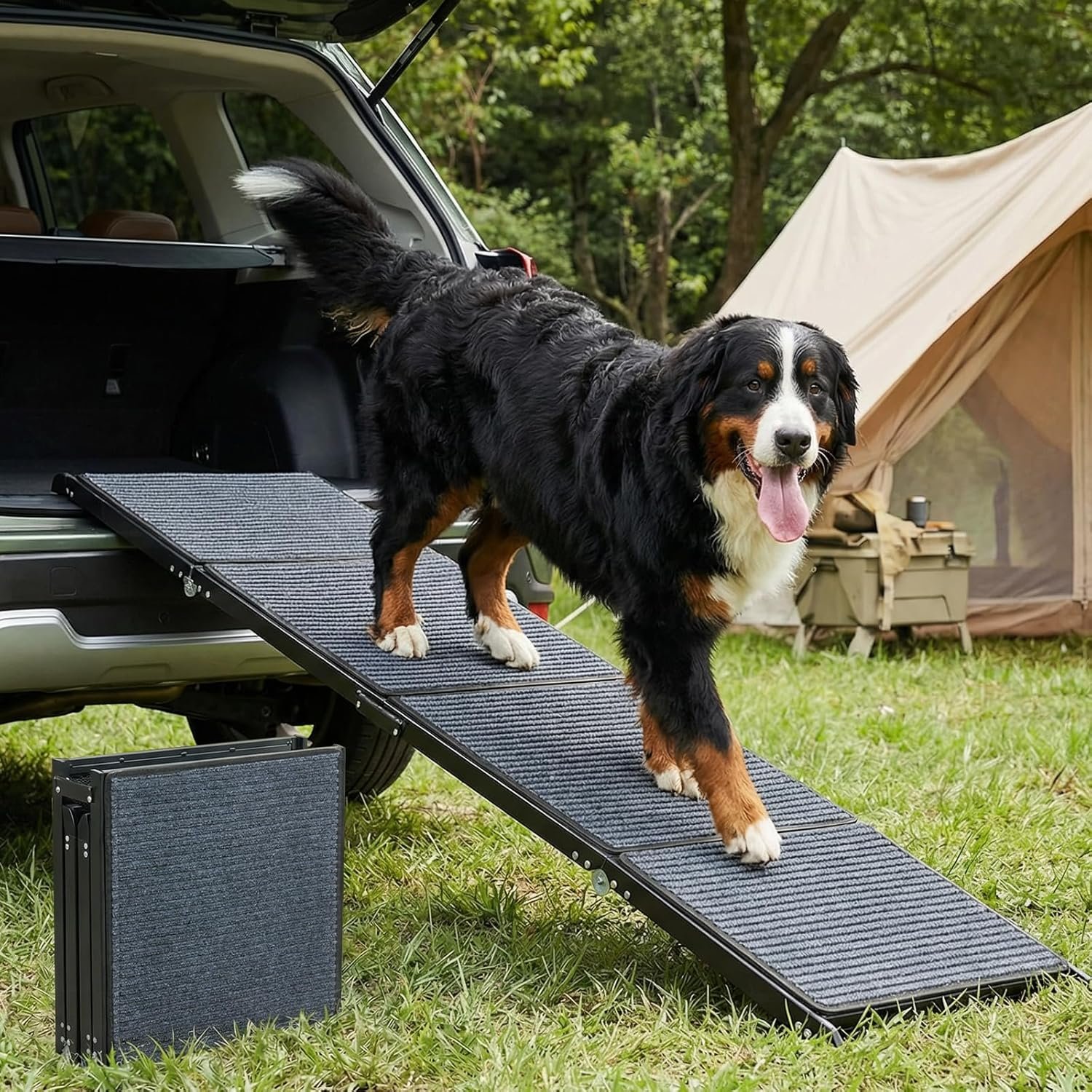
My 11-year-old lab started hesitating at the car door about six months ago. What used to be a flying leap had become a careful pause, then a look back at me asking for help. Hip stiffness from age had made the jump uncomfortable, and I knew lifting a 70-pound dog twice a day wasn’t sustainable either.
A dog ramp changed our routine entirely. He walks up on his own, no hesitation, no strain. The vet noticed reduced inflammation at our next checkup and pointed directly to eliminating the jump impact as the likely reason.
The Foldable Dog Ramp That Makes Car Loading Safe for Any Breed
This is one of Amazon’s top-rated dog ramps in the $50–$120 range — featuring a non-slip surface, foldable design for easy storage, weight capacity of 150–250 lbs, and a gentle incline suited to senior dogs and post-surgery recovery.
What separates a quality dog ramp from a cheap one:
- Non-slip tread surface: dogs need confident footing or they won’t use the ramp voluntarily
- Gentle slope angle: steep ramps put strain on rear legs — look for less than 20 degrees for large breeds
- Wide platform: at least 16 inches wide for large dogs to walk comfortably without stepping off the edge
- Secure base contact: rubber feet that grip the ground and door sill without sliding
- Fold-flat storage: collapses to fit in the trunk or behind a back seat
👉 Click the dog ramp you’re reading about to check current pricing and weight capacity on Amazon
Why Jumping Into Cars Injures Dogs Over Time
The physics of a dog jumping into an SUV or truck are hard on joints even in healthy animals:
- Impact force on landing equals 3–4x the dog’s body weight — applied directly to wrists, elbows, and shoulders
- Rear leg push-off strains hips and spine, especially in breeds prone to dysplasia
- Repetitive impact accumulates over years before symptoms appear — damage is happening well before limping starts
- For dogs already diagnosed with arthritis, hip dysplasia, or ACL injuries, jumping is contraindicated by most veterinarians
For senior dogs where joint health is a priority alongside car access, the best orthopedic dog bed for large breeds pairs naturally with a ramp — reduced impact getting in the car combined with proper overnight joint support.
Before vs. After Using a Dog Ramp
Before:
- Senior dog visibly hesitating and straining to jump into the SUV
- Lifting a 70-lb dog twice per trip — unsustainable and a back injury risk for the owner
- Post-jump stiffness visible in rear legs on arrival at destination
- Vet recommending reduced jumping but no practical solution in place
After:
- Dog walks up ramp independently with no encouragement needed after day 3 of training
- No lifting required — car trips no longer a physical challenge for owner or dog
- Rear leg stiffness reduced noticeably within two weeks of eliminating the jump
- Vet confirmed improvement in joint inflammation at follow-up
5 Tips for Getting Your Dog to Actually Use the Ramp
- Introduce the ramp on the ground first — let your dog walk across it flat before it’s angled up to the car. Familiarity with the surface removes the first hesitation.
- Use high-value treats placed along the ramp surface to encourage first uses. Don’t rush — one step at a time with reward is better than forcing a full walk-up.
- Keep the ramp in place for the first week rather than folding it away after each use. Consistent presence helps dogs understand it’s a permanent option.
- Angle matters: steeper is harder. If your dog struggles, try positioning the ramp at a shallower angle using a lower point on the vehicle doorframe or bumper.
- Never push or lift the dog onto the ramp mid-use — it creates negative associations. If they freeze, encourage verbally and wait. Most dogs self-correct within 3–5 attempts.
For more on managing mobility and comfort in senior dogs, the guide to introducing a new dog to your home also covers adapting your home environment for dogs with changing physical needs.
Q&A: Dog Ramp Questions Pet Owners Search
Q: At what age should I start using a dog ramp?
You don’t need to wait for problems to appear. Many vets recommend starting ramp use around age 7 for large breeds as a preventive measure. For breeds prone to hip dysplasia (German shepherds, labs, goldens), even earlier use makes sense.
Q: Will my dog actually use the ramp or just try to jump anyway?
Most dogs adapt within 3–7 days with consistent positive reinforcement. The key is making the ramp the only accessible option temporarily — stand in front of the door so jumping isn’t possible while the ramp is in place.
Q: What weight capacity do I need?
Buy above your dog’s weight with margin. A 70-lb dog should have a ramp rated for 150 lbs minimum. Dynamic loading from walking movement exceeds static weight, so excess capacity matters.
Q: Can I use a ramp for a dog post-surgery?
Yes — ramps are commonly recommended by vets post-TPLO, hip replacement, and spinal surgery. Confirm incline angle with your vet for specific recovery stages, as some surgeries restrict extension range early in recovery.
Final Take
A dog ramp is a purchase that becomes obvious in hindsight — the accumulated joint damage from years of jumping is real, and eliminating it costs less than a single orthopedic vet visit. For senior dogs especially, a ramp is one of the highest-impact quality-of-life improvements available.
Fold it out. Walk up. No strain. Every trip.
Gentle slope. Happy joints. Senior dog sorted.
Affiliate disclosure: This article may contain affiliate links. If you purchase through them, PetGuideClub.com may earn a small commission at no additional cost to you.