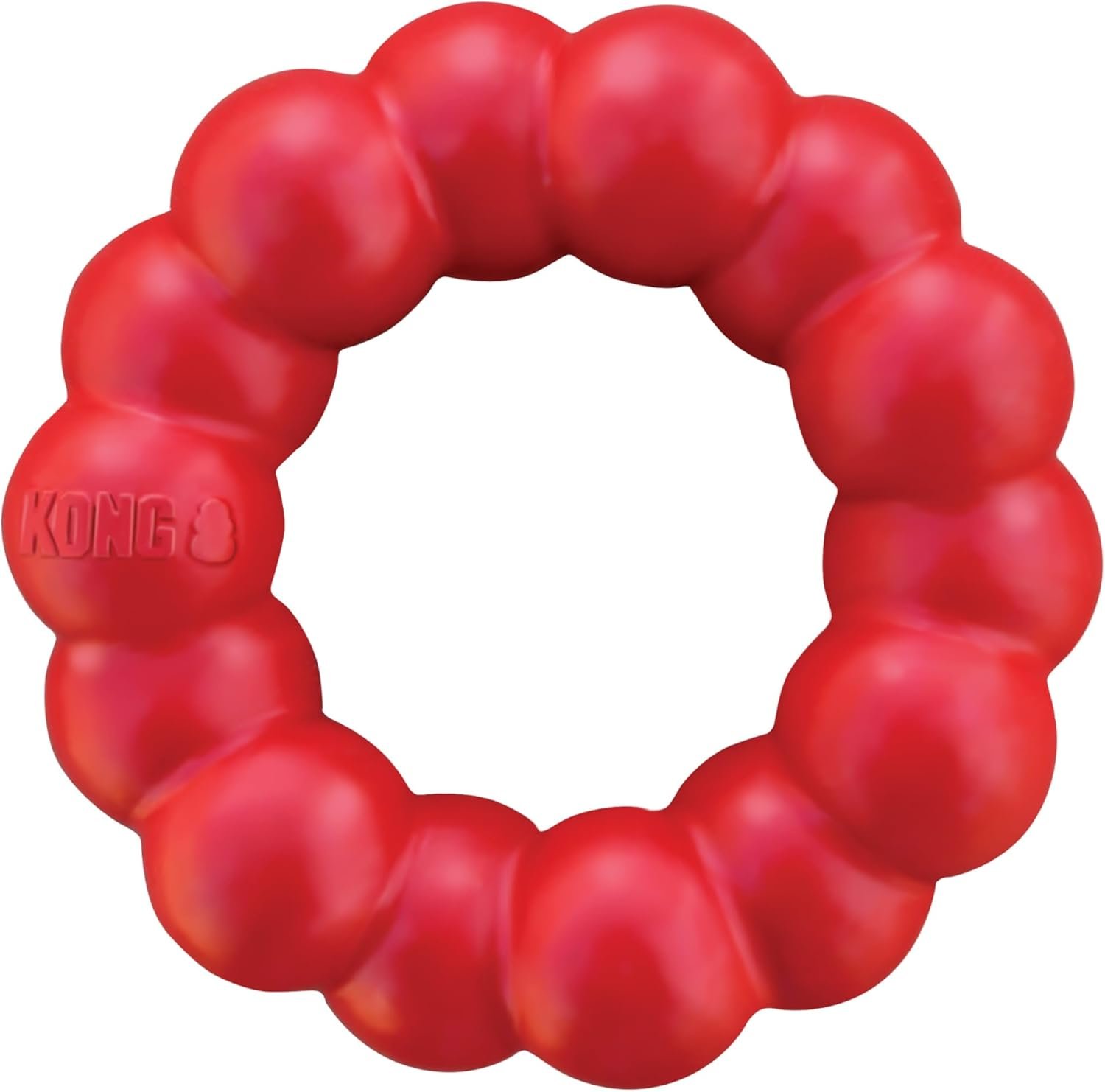
My puppy destroyed four toys in the first three weeks of ownership. Rope toys unraveled within days, squeaky plush toys were gutted in one session, and the rubber ball that was supposed to be ‘durable’ lasted two. Every destroyed toy became a potential foreign body ingestion concern on top of the wasted money.
Switching to genuinely tough chew toys — thick natural rubber designed for aggressive chewers — ended the destruction cycle. The same toys are still intact five months in. The puppy chews them daily. The replacement cost dropped to zero.
The Indestructible Rubber Chew Toys Built for Aggressive Puppy Chewers
This is one of Amazon’s top-rated puppy chew toy sets in the $20–$50 range — featuring natural or thermoplastic rubber construction, multiple textures and shapes for dental and gum stimulation, treat-stuffable designs for engagement, and safety ratings for supervised aggressive chewing.
What separates a quality chew toy from a destructible one:
- Natural rubber or thermoplastic rubber: the only materials that withstand aggressive chewing without fragmenting into swallowable pieces
- Appropriate hardness: soft enough that the toy flexes (rigid toys can crack teeth), firm enough that it cannot be bitten through
- No squeakers or stuffing: both become choking and ingestion hazards the moment a dog breaches the outer layer
- Treat-stuffable channels: peanut butter or kibble fill keeps dogs engaged for extended periods, directing chewing to the toy rather than furniture
- Size-appropriate: toy must be large enough that the dog cannot get it entirely in its mouth — this is the primary safety sizing criterion
👉 Click the puppy chew toys you’re reading about to check current pricing and size options on Amazon

Why Dogs Chew and How to Direct It Constructively
Chewing is a biological imperative, not a behavioral problem:
- Teething (8 weeks – 6 months): puppies chew to relieve gum discomfort from emerging teeth — the drive is intense and cannot be eliminated, only redirected
- Adult dogs chew for stress relief, boredom management, and jaw exercise — a dog that doesn’t chew toys chews furniture
- Correct toy texture matters: soft gum-relief toys for teething puppies, firmer rubber for adult chewers
- Mental engagement: treat-stuffed toys create problem-solving activity that tires dogs more effectively than physical exercise alone
Appropriate chew toys are one component of comprehensive puppy setup. The guide to introducing a new dog to your home covers how toy rotation, crate training, and enrichment activities work together to manage puppy energy and prevent destructive behavior.
Before vs. After Switching to Indestructible Toys
Before (soft/squeaky toys):
- Toy destruction in under 48 hours for most purchases
- Squeaker and stuffing pieces requiring constant monitoring for ingestion
- $40–60/month in toy replacements
- Puppy turning to furniture, shoes, and baseboards when toys were destroyed
After (natural rubber chew toys):
- Same toys still intact after 5+ months of daily aggressive chewing
- No replacement cost after initial purchase
- Stuffed Kong and similar toys keeping the puppy occupied for 20–30 minutes independently
- Furniture chewing eliminated — appropriate outlet available and rewarded consistently
5 Ways to Make Chew Toys More Engaging
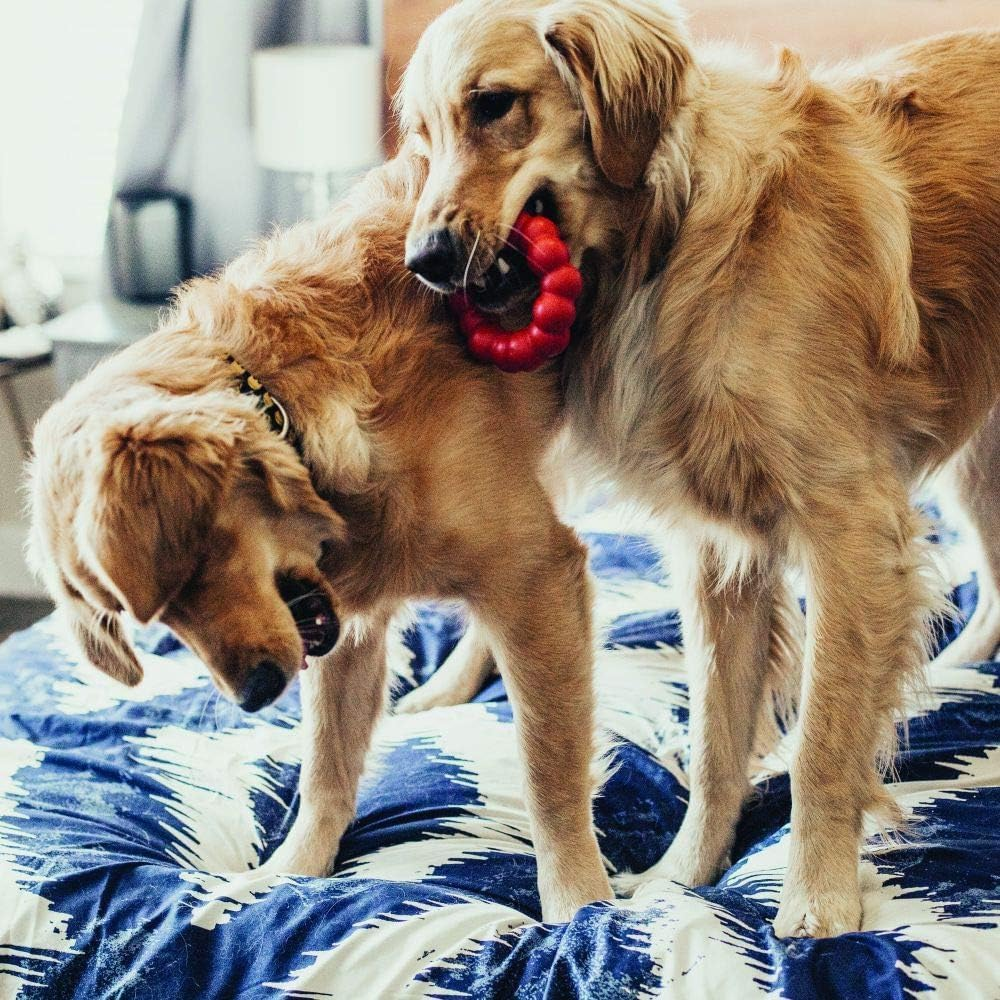
- Stuff treat toys with peanut butter (xylitol-free only) and freeze them. Frozen stuffed toys last 3–4x longer than room-temperature and provide gum-soothing cold for teething puppies.
- Rotate toys every 2–3 days. Novelty maintains interest — a toy that has been available for a week is less engaging than one reintroduced after a short absence.
- Rub the toy with something interesting: a small amount of meat drippings, cheese, or the puppy’s favorite treat rubbed on the surface makes any rubber toy immediately more appealing.
- Use the ‘only this toy is available’ technique during supervised sessions: put all other toys away, leaving only the target toy. Dogs engage more intensely with what’s available.
- Reward chewing on the right toy with verbal praise. Every time you see the puppy chewing the appropriate toy, say ‘good chew’ and occasionally toss a treat their direction. Reinforcement accelerates toy preference.
For complete puppy care beyond toys, the best automatic pet feeder guide for scheduled feeding covers how scheduled feeding routines reduce anxiety-based chewing that spikes around inconsistent meal times.
Q&A: Puppy Chew Toy Questions New Dog Owners Ask
Q: How do I know if a chew toy is safe for my puppy?
Check that the toy cannot be reduced to pieces small enough to swallow. The thumbnail test: if you can leave a thumbnail indent, the toy is appropriately soft. If you cannot dent it at all, it’s too hard and can crack teeth. No pieces should be breakable or detachable.
Q: Can my puppy have rawhide chews?
Most veterinary organizations now advise against rawhide due to choking risk and digestive complications. Natural rubber toys and bully sticks from reputable sources are safer alternatives that satisfy the same chewing need without the ingestion risk.
Q: My puppy ignores the chew toy and chews furniture instead. What do I do?
Interrupt the furniture chewing with a calm ‘no,’ immediately offer the chew toy, and praise when the puppy takes it. Consistency over 1–2 weeks establishes the preference. Also ensure the chew toy is more interesting than the furniture — stuffing it makes it unambiguously better.
Q: How many chew toys does a puppy need?
3–5 toys of different textures in rotation is ideal. Having only one toy reduces novelty; having too many reduces the perceived value of each one. Rotate rather than leaving all toys available simultaneously.
Final Take
Indestructible chew toys are a one-time investment that replaces a recurring cost and solves the furniture destruction problem simultaneously. The right rubber toy, sized correctly and kept interesting with stuffing and rotation, directs chewing behavior where it belongs indefinitely.
Chew the toy. Not the furniture. Every time.
Tough rubber. Long-lasting. Teeth and furniture both protected.
Affiliate disclosure: This article may contain affiliate links. If you purchase through them, PetGuideClub.com may earn a small commission at no additional cost to you.